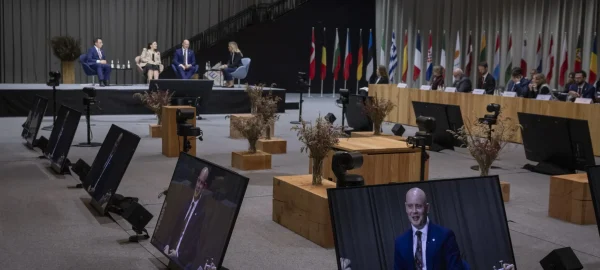
At a meeting of culture ministers in Copenhagen, a Declaration on the role of culture and free media in defending European democracy was signed. The declaration, supported by 26 of the 27 European Union member states as well as the United Kingdom, Ukraine, Iceland, Norway and Switzerland, emphasises that culture and credible media are key in combating disinformation, foreign influence and attempts to create social divisions.
Croatian Minister of Culture and Media Nina Obuljen Koržinek also signed the declaration, thereby joining the call to strengthen cultural and media resilience. The minister signed a document highlighting the importance of cultural diversity, artistic freedom and independent media as pillars of democratic resilience in Europe.
It remains to be seen whether the words of the declaration will translate into concrete action or, as has too often been the case, remain merely words on paper. Below is the full text of the Declaration:
Declaration on the necessity of culture and media as safeguards for our European democracies
It is more important than ever that we actively safeguard our European democracies and ensure their resilience. In our efforts to do so, it is vital that the intrinsic value and power of our culture, cultural heritage and independent media are further recognised. We believe that culture, cultural heritage and free, pluralistic and independent media play a significant role in protecting and promoting European values and democratic resilience.
To strengthen our democratic resilience, we must draw upon our shared European history, values and identity – the very foundation of what defines and unites us. Europe’s rich and varied heritage and cultural diversity are woven into the fabric of this identity, telling the story of where we come from and how history has shaped the Europe we are today. We believe that the protection and promotion of our cultures and cultural heritage, in all their richness and diversity, should be considered as an integral part of European security policy.
Our cultural heritage, tangible, intangible and digital, acts as a living memory, connecting us to our past and with each other. The arts provide a powerful form of free expression, through which we can reflect upon, challenge, and reaffirm the democratic values we stand for. Our rich cultural and linguistic diversity and heritage connect as well as inspire us and lift our spirits in the face of threats and adversity, strengthening our democratic unity and collective resilience. Our written and audio-visual heritage preserves the authentic evidence of our diverse histories and common democratic life, ensuring that citizens can hold institutions accountable and that our societies are grounded in reliable facts.
Free, independent and diverse media remains our best source of trustworthy, accurate and reliable information which can in turn prevent the erosion of trust in our democracies, in the media themselves, and, most importantly, in each other. Such media are essential for fostering a thriving civic sphere and for safeguarding democracy and fundamental rights, including the right to information. In doing so, they strengthen and secure sustainable public spaces for democratic discourse while serving as a safeguard against foreign information manipulation, interference and disinformation. In this regard, media and information literacy is an essential component for democratic resilience.
The use of AI in producing and distributing cultural and media content raises ethical, societal and economic questions and questions of reliability. It is becoming increasingly difficult to distinguish between authentic and AI-generated or manipulated material online, creating uncertainty about authorship, intellectual property and accountability. Digitally manipulated images and videos can create fundamental doubts about what is a true representation of reality and what is not. Protecting the integrity of cultural expression and the personal characteristics of our citizens is paramount. We find this to be important for our society and as a part of properly functioning democracies.
This declaration serves as a reminder that culture, cultural heritage and media policies must be a vital part of the European collaboration and European security in order to protect our democracies. We commit to upholding cultural diversity, artistic freedom and supporting media pluralism and freedom at both national and European level. We also recognise the need for guaranteeing citizens’ access to trustworthy news media and to equip them with the digital skills and critical thinking abilities needed to navigate a digitised information landscape.
In this light, we agree to the following guiding principles:
-
Our citizens must live in societies with free and independent cultural life.
-
Our citizens must live in societies where culture and cultural heritage is safeguarded for the benefit of society today and for future generations.
-
Our citizens must have access to reliable information and to an information environment free of foreign interference.
-
Our citizens must live in societies with free, resilient and independent media.
-
Our citizens must be able to participate in public debate and democratic conversations.
-
Our citizens – especially our children – must be presented with and have access to free and diverse European content.
-
Our citizens must be protected against digital replicas of their personal characteristics without consent.