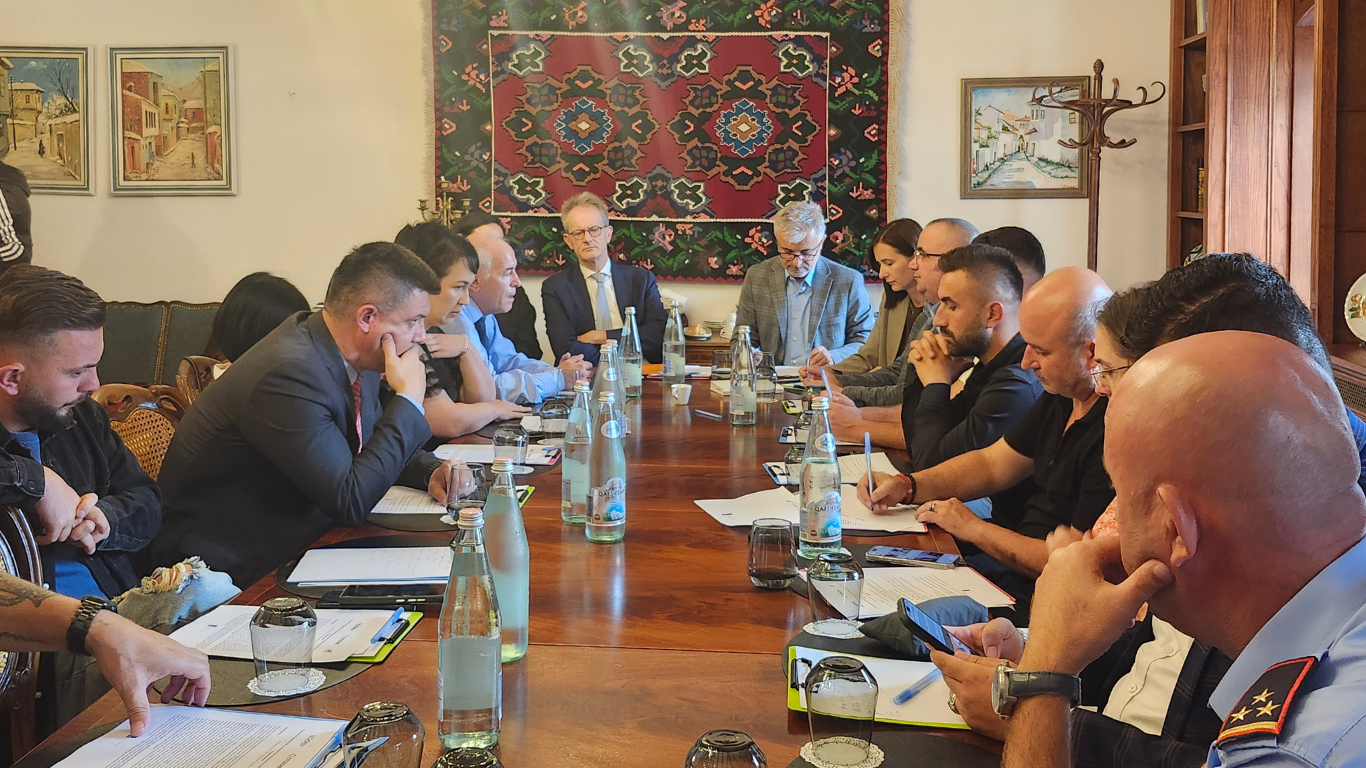
Journalist safety cannot be guaranteed through laws and protocols alone it requires trust, communication, responsibility, and institutional commitment. This was the central message of the roundtable in Korça on 11 September 2025, where prosecutors, police, and journalists came together to confront the persistent challenges of journalist safety and media freedom in Albania.
Participants underlined that mistrust between media and institutions stems primarily from weak communication; that journalists must show the courage to denounce threats while upholding ethical standards; and that personal relationships are as vital as legal frameworks in building cooperation. The discussions also made clear that public credibility remains the strongest protection for journalists, while prosecutors and police must be proactive and transparent, ensuring access to information and pursuing ex officio investigations.
Equally important, institutions carry a direct responsibility to protect journalists. This means moving beyond statements and protocols to implement a fast-track rapid response mechanism so that threats and attacks are addressed immediately and consistently.
As Albania advances on its path toward EU accession, the Korça roundtable showed that progress depends on both systemic reforms and human relationships. Protecting journalists is not only about institutional mechanisms; it is about daily practices of openness, solidarity, respect, and accountability that make press freedom real across the country, not just in Tirana.
The event gathered local and national journalists, prosecutors, and police representatives to engage in dialogue on challenges, gaps, and opportunities to improve the protection of journalists and media freedom in Albania. This workshop followed earlier meetings in Fier (April 2025) and Shkodra (June 2025), part of a long-term effort to strengthen structured dialogue outside Tirana.
Dutch Ambassador Reinout Vos emphasized that media freedom is a core democratic and European value, urging the creation of a fast-track institutional mechanism to coordinate state responses to threats against journalists. He noted that such challenges are not unique to Albania and called for constructive dialogue between institutions and media.
Blerjana Bino presented alarming monitoring data—45 violations in 2024 and 29 new cases already in 2025, many unreported due to mistrust and lack of support. While welcoming recent institutional steps, she stressed the need for sustainable, institutionalized mechanisms, Penal Code amendments recognizing journalists as protected professionals, and a rapid response system to ensure swift action against threats and attacks.
This roundtable was organized as part of the project, “Strengthening Journalistic Safety through Engaged Stakeholder Collaboration and Journalists’ Capacity Development in Albania”, ” implemented by SCiDEV in collaboration with Citizens Channel and Free Press Unlimited, with the support of the Embassy of the Kingdom of the Netherlands in Albania. To learn what we have done so far please consult our Stakeholders’ Brief and check out our Monthly Media Landscape Briefs.