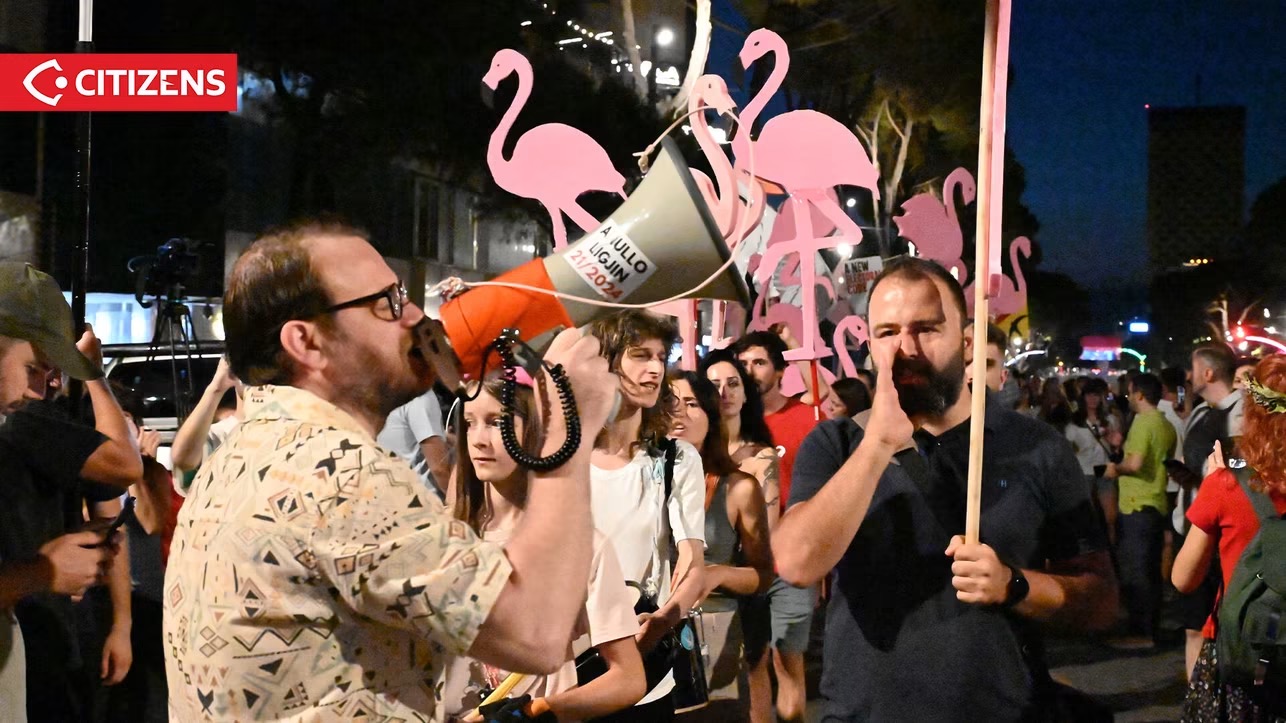
Between 11 and 15 July 2026, against the backdrop of Albania’s ongoing Flamingo Revolution, allegations surrounding an online campaign against businesses escalated into the public targeting of journalist Gjergj Erebara and BIRN Albania, the nonprofit organisation behind Reporter.al and one of the country’s most prominent centres of investigative and public interest journalism.
The episode illustrates a broader pattern of pressure against journalists who take visible positions on contentious public issues. Civic engagement is recast as evidence of political coordination, professional independence is questioned, and unsupported allegations are repeated until they acquire the appearance of fact. Public targeting then moves beyond disagreement with a journalist’s views. It seeks to damage credibility, isolate the individual, intimidate others from speaking and transfer the pressure to the newsroom, its funders and its institutional partners. The events of mid-July show how this process can turn one journalist into a public target and use him as a route to delegitimise an entire media organisation.
The immediate context was the Flamingo Revolution, which began on 30 May against luxury tourism development in the protected Vjosa-Narta landscape and later broadened into demands for political accountability and the Prime Minister’s resignation. In early July, anonymous one-star Google reviews targeted businesses seen as close to the government, prompting a police investigation and setting the stage for the accusations against Erebara.
Erebara’s public support for the Flamingo Revolution was used to portray him as an organiser of the online campaign against businesses. Media editorials described the reviews as a “terrorist attack”, placed him within the protest’s alleged organising structure and labelled him an “assailant” and a “pseudo-journalist”. No evidence was published showing that he had directed the reviews, coordinated participants or controlled the accounts involved. His civic engagement were treated as sufficient proof.
The pressure intensified when Gjergj Luca, owner of the Rozafa business group and a prominent public figure, attacked Erebara in a video using derogatory language and accusing him of targeting his companies. The video spread across social media and was republished by several portals under insulting headlines that mocked Erebara’sappearance and questioned his standing as a journalist. This amplification was followed by articles claiming that tourism operators wanted him excluded from hotels and restaurants, although no verified decision, formal initiative or evidence of implementation was presented. Comments beneath the posts and articles called for his imprisonment, suggested that people would “find” him and encouraged direct action against him.
The accusations then widened to BIRN Albania, despite Erebara’sposition as an external contributor rather than a staff journalist or editor. BIRN’s reporting, international funding and institutional partners were presented as part of the alleged campaign, without evidence of any newsroom involvement. The sequence placed Erebaraunder sustained personal and professional pressure while also using his civic engagement as a route to discredit and intimidate one of Albania’s leading investigative media organisations.
Four days later, a separate exchange reinforced the same pattern of pressure. Taulant Balla, the chair of the governing Socialist Party’s parliamentary group, responded to an altered image published by Erebara on his personal Facebook account. After identifying the image as false, Balla did not confine the dispute to the post itself, butwidened it to BIRN Albania. Balla posted the single-word condemnation “SHAME” and publicly attributing responsibility to the organisation for Erebara’s personal post, despite the absence of any evidence of editorial or institutional involvement. Referring to Erebaraas BIRN’s “editor/collaborator”, he questioned the organisation’s mission, named the Open Society Foundations, Sweden’s development agency SIDA, European Union programmes and foreign embassies, and announced that he would contact them directly.
Coming from one of the country’s most senior governing-party officials, the message carried weight beyond an ordinary political disagreement. It suggested that the personal civic expression of a contributor could expose an independent newsroom to political pressure.
Taken together, these events show how journalists who engage publicly with contentious civic issues can become vulnerable to a sequence of escalating attacks.
European human rights standards protect journalists not only in their professional reporting but also in their participation as citizens in public debate. Those protections do not shield journalists from criticism or excuse factual errors. They do, however, require that responsibility remain linked to evidence. Public support for a protest does not establish responsibility for every action associated with it. A contributor’s personal social media activity does not automatically become the responsibility of the newsroom that publishes his work. Nor does criticism of one journalist justify political pressure on the institutions that finance or support independent journalism.
The stakes extend well beyond one journalist and one newsroom. Civic space depends on journalists, researchers, activists and citizens being able to enter public debate without being cast as conspirators, stripped of professional legitimacy or turned into a risk for the organisations around them. Personal targeting, reputational attacks and pressure on newsrooms and funders raise the cost of speaking and weaken independent scrutiny. The result is a chilling effect in which silence becomes safer than participation and freedom of expression narrows without any formal act of censorship.
Photo: Citizens Channel