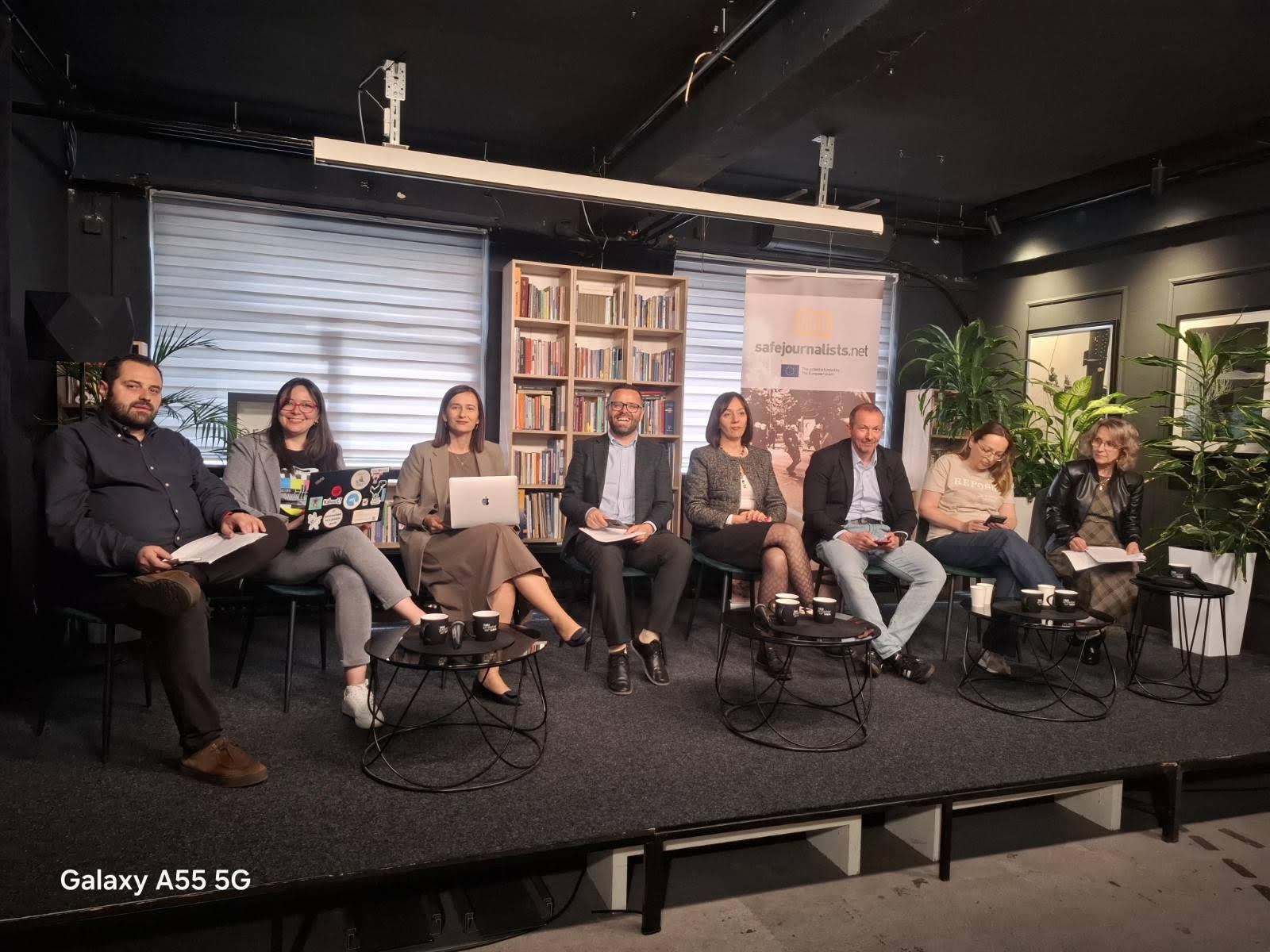
Presenting the Albania findings, researcher Blerjana Bino highlighted that while Albania records comparatively fewer cases of severe physical violence, this should not be interpreted as a safer media environment.
Lower violence, but sustained systemic pressure
According to the data, Albania recorded 16 physical attacks and 3 threats to life in 2025, placing it among countries with lower levels of extreme violence in the region. However, the findings point to a different pattern of risk.
Bino explained that pressure on journalists in Albania is often less visible, more systemic and cumulative, shaping journalistic work over time rather than through isolated incidents. Nearly half of journalists report experiencing threats or intimidation, while around 44% report pressure to modify, delay or abandon stories.
This dynamic contributes to self-censorship and narrows editorial space, particularly in an environment marked by political interference, economic dependency and undue influences.
Albania’s overall score did not change substantially, from 2.90 in 2024 to 2.98 in 2025 and continues to reflect structural challenges rather than sustained progress. Bino also pointed to areas where sustained advocacy by the SafeJournalists Network has contributed to structural improvements such as protection mechanisms. These developments have helped establish a more structured response framework, but implementation remains uneven, and journalists’ trust in these new mechanisms is still limited.
Women journalists: risks are structural, cumulative and under-recognised
In the gender panel, findings from the 2025 Albania brief on the safety of women journalists and media workers showed that risks are systemic, cumulative and shaped by the interaction of digital, political and professional pressures rather than isolated incidents. In 2025, 13 cases directly targeted women journalists, involving 15 victims, with attacks primarily expressed through online harassment, smear campaigns and reputational pressure, often using misogynistic narratives, sexualised language and references to family members. These forms of harm are frequently coordinated and repeated, producing a sustained chilling effect over time.
The analysis highlights that these risks are closely linked to structural conditions within the media sector, including precarious employment, political pressure, ownership influence and gender inequality in newsroom decision-making, which together constrain professional practice and limit participation in public-interest journalism. As a result, the impact is both individual and structural, leading to increased caution, reduced visibility and, in some cases, modification or abandonment of stories, ultimately affecting not only the safety of women journalists but also media pluralism and the diversity of perspectives in public debate.