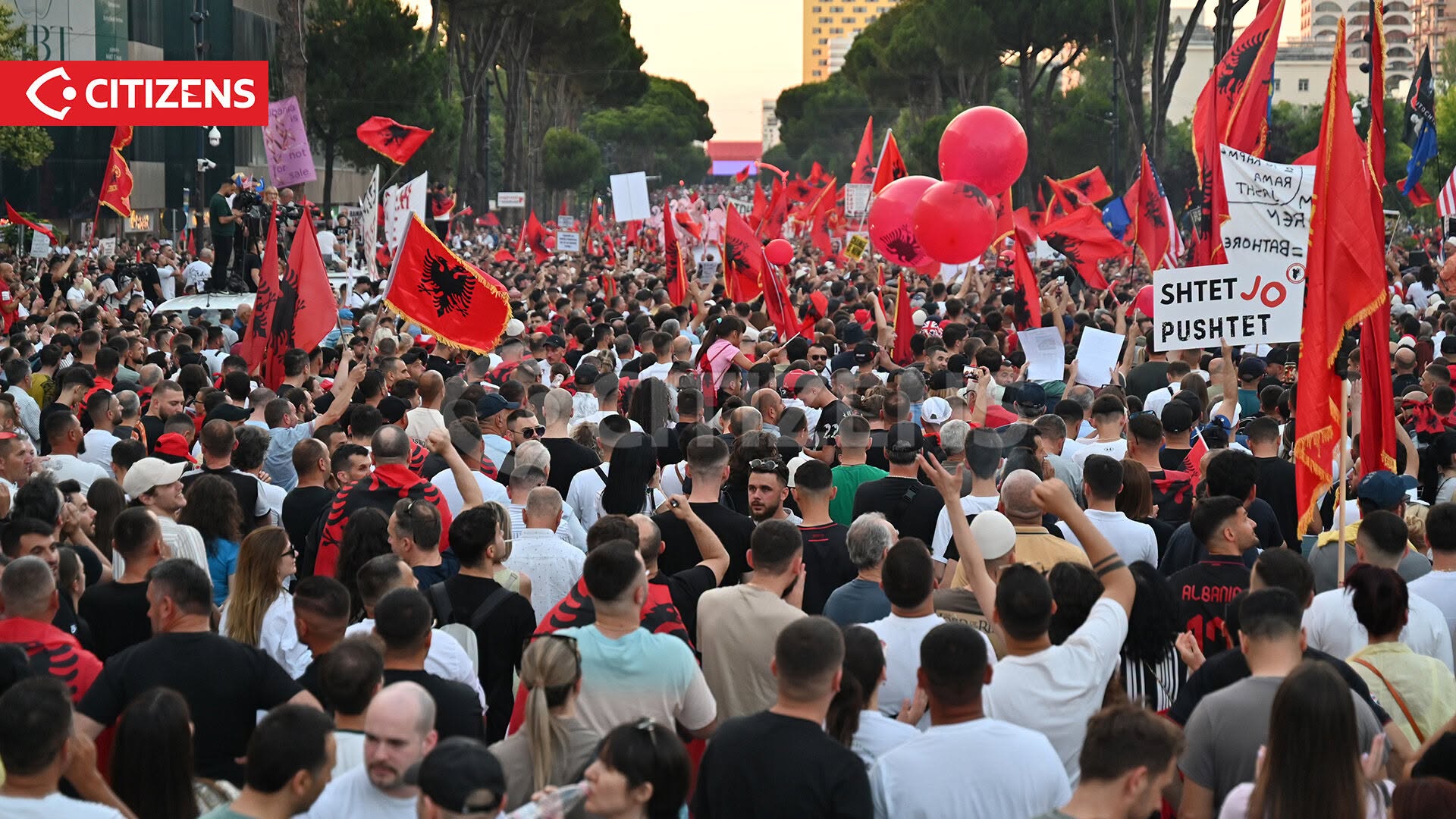
In his 20 June address to the Socialist Party parliamentary group and cabinet, Prime Minister Edi Rama framed the Flamingo Revolution as a warning about democracy in the age of the algorithm. He described Albania as having spent 20 days inside a “digital cyclone,” where a local confrontation in Zvërnec was transformed within 48 hours into a global online battle. In his account, the protest gained scale not mainly through the substance of concerns about Narta or protected areas, but through the symbolic power of the Kushner-Trump connection, anti-capitalist and anti-Trump sentiment, domestic anger against him and the Socialist Party, foreign media attention, online mobilization and hostile amplification. Rama argued that algorithms move faster than verified news, emotions arrive before facts, and perception can become truth while truth remains isolated. His central concept, the “proletariat of the algorithm,” described a new social condition in which attention, visibility, screens, likes and followers shape political identity and authority. He presented the protest square as a “television studio of the algorithm,” where images are produced for circulation, and protest becomes a market of emotions, clicks, morality and careers.
The speech has direct implications for journalism because it places media, social media, citizen documentation and political mobilisation inside the same analytical field. Rama speaks about an ecosystem where social platforms, traditional media, organisations, political actors and hostile interests interact. In that ecosystem, documentation and amplification become politically contested.
For journalists covering protests, this is a sensitive terrain. Reporters, camera operators, photojournalists, freelancers and independent media workers are part of the visible information chain. They document events, publish images, verify claims and transmit voices from the ground. In Rama’s frame, however, the wider information chain is also the space where hysteria, clicks, manipulation and hostile amplification operate.
This creates an ambiguity around documentation. A video from the ground may be read as evidence, content, mobilisation tool or manipulation, depending on who interprets it. A livestream can function as transparency and as platform performance at the same time. A journalist may be documenting a public-interest event while operating in an information space that political power describes as unstable, emotional or contaminated by hostile amplification.
For SafeJournalists, the key issue is this contested status of visibility. Digital tools make protests visible and help journalists document public-interest events. The same tools can also be used to question the legitimacy of that visibility by describing it as algorithmic pressure. The boundary between reporting, activism, amplification and disinformation becomes politically contested.
Rama’s 20 June speech reframes the Flamingo Revolution as a problem of algorithmic politics. The protest is presented as a local event transformed by platform incentives, emotional acceleration, symbolic associations and online visibility. This allows the government to treat the mobilisation not only as opposition to a project, but as evidence of a wider crisis in the digital public sphere.