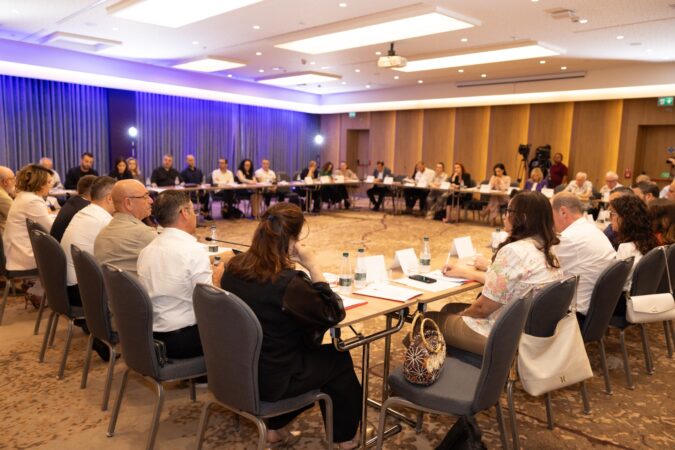
Albanian Radio and Television (RTSH) convened a high-level roundtable to discuss current challenges and to outline a transformative vision for the future. The event assembled key stakeholders from the media sector, including veteran broadcasters, media professionals, civil society organizations, members of the Parliamentary Media Committee, representatives of the Audiovisual Media Authority (AMA), and other public institutions.
The General Director, Eni Vasili, underscored the critical need for reforming RTSH into a contemporary, efficient, and trusted public broadcaster. She openly addressed the institution’s entrenched problems, notably poor performance, non-transparent employment practices, outdated technology infrastructure, fragmented programming across numerous channels, and inadequate online presence.
The Chair of RTSH’s Steering Council, Fatjon Hoxhalli, laid out three strategic pillars essential for institutional renewal: finances, organizational structure, and editorial direction. Addressing the financial challenges, the Chair highlighted RTSH’s significant liquidity issues and unsustainable cost structures, stressing the urgent necessity for a revised economic model. This new financial strategy will be informed by an independent external audit, providing the basis for transparent, needs-driven funding.
Regarding structural reforms, the Chair emphasized the imperative of re-evaluating the existing complex and overlapping channel setup. A comprehensive functional review and administrative streamlining will establish an efficient organizational framework, clarifying roles and minimizing duplication.
On the editorial front, the Council prioritized the development of a coherent editorial identity across platforms, informed by rigorous audience research and aligned with RTSH’s public service obligations. The future strategy will leverage insights from the external audit and be shaped by an inclusive and transparent consultation process.
Looking ahead, the General Director outlined several key objectives:
- Implementation of a restructured programming model driven by thematic content tailored to audience needs.
- Integration of digital platforms and significant infrastructure modernization.
- Enhanced governance mechanisms prioritizing transparency, inclusiveness, and accountability.
She concluded by reaffirming RTSH’s foundational mission of public service, stressing the critical importance of rebuilding public trust through consistent credibility, content quality, and innovation.
Significantly, the reform initiative enjoys bipartisan political support, with members of parliament from both the Socialist Party (PS) and Democratic Party (PD) publicly advocating for substantive change. Additionally, the Audiovisual Media Authority reaffirmed its commitment to providing technical support and ensuring alignment with European broadcasting standards. Participants collectively emphasized the importance of embedding RTSH’s strategic transformation within a broader national media reform agenda, highlighting the interconnectedness of systemic media reform in Albania.
Copyright on photos: BalkanWeb